
Treatment at NWTC
Guiding Principles
At NWTC, we believe in holistic healing that nurtures the mind, body, spirit, and emotions. Our approach honors both cultural traditions and evidence-based practices, ensuring that every individual receives compassionate, trauma-informed care. Our guiding principles are:
Honoring Cultural Identity – We recognize the significance of beliefs and traditions, ensuring they are respected and upheld in the healing journey.
Integrating Evidence-Based Practices – Our treatment approach is rooted in proven, trauma-informed methods that support deep and lasting healing.
Embracing Indigenous Healing – We acknowledge the vital role of Indigenous healing practices in shaping self-identity and provide opportunities for clients to connect with cultural and traditional treatment methods.
Treatment is Culture – Cultural practices are not an add-on but an essential part of treatment, woven into everything we do.
Respecting Individual Healing Journeys – Every client's path is unique, and we honor their personal healing preferences.
Building a Strong Support System – We recognize that healing extends beyond the individual—meaningful, lasting change happens within the strength of a support network.
Teaching Resilience and Healthy Coping – We equip clients with the tools to overcome addiction-oriented behaviours and develop lifelong resilience.
Empowering Clients for the Future – Our goal is for every client to leave treatment with self-determination, confidence, and the skills needed to thrive in their home and community.
At NWTC, we don't just treat—we empower, uplift, and walk alongside each person on their journey to healing.
Our Philosophy
At Nightwind Treatment Centre, we believe in the transformative power of healing, connection, and cultural strength. Our philosophy is rooted in the understanding that youth can overcome self-defeating behaviours and build healthy, fulfilling lives with the right support, tools, and relationships. Our approach is guided by the following principles:
1. Breaking Cycles, Restoring Futures
Self-defeating behaviours in youth can be resolved through compassionate assessment, personalized treatment, and strong aftercare support. Without intervention, these behaviours can lead to personal struggles and family breakdown.
2. Empowering Youth with Skills for Life
True healing requires more than just treatment—it demands equipping youth with the skills, knowledge, and personal resources to navigate challenges and sustain their recovery. Through our programs, youth develop essential coping strategies and healthy relationship skills that empower them for the future.
3. Blending Tradition with Innovation
Healing is most effective when it honours both Indigenous traditions and evidence-based practices. Our treatment approach is flexible, integrating cultural teachings and contemporary therapeutic methods to guide Indigenous youth toward lasting well-being.
4. Healing Through Family Connection
Family involvement is essential to a youth's success. We actively engage families in the healing journey, ensuring they are supported before, during, and after treatment. Strong family bonds provide a foundation for long-term recovery.
5. Sustained Support for Lasting Change
Recovery doesn't end when treatment does. Ongoing aftercare and relapse prevention planning are woven into every step of the healing process. By connecting youth to community resources, we create a strong safety net for continued success.
6. The Power of Positive Role Models
Youth thrive when surrounded by healthy, supportive adults. We ensure that they have opportunities to learn from and connect with Indigenous individuals and families who exemplify strength, resilience, and well-being.
7. A Continuum of Care for All Stages
Our program is designed to meet youth where they are—whether they are just beginning their journey, actively engaged in treatment, or facing chronic struggles. With outreach and tailored services, we address the needs of youth, families, and communities holistically.
8. Strengthening Connections, Not Labeling Risks
Instead of labelling youth as "at-risk," we recognize them as being either thinly or thickly webbed within their support networks. By fostering meaningful connections with stable, caring adults, we help youth understand the importance of these relationships in their journey toward healing and resilience.
At Nightwind Treatment Centre, we believe every young person has the strength to heal. Through cultural connection, strong relationships, and unwavering support, we help them reclaim their futures.
STAGES of Treatment
Spiritual Transformation towards an Awareness and Guidance of Emotional Self
A healing model integrating the 7 Traditional Values with trauma-informed care
Mental/Awareness
Focus: Honesty • Humility
Building self-awareness and understanding through honest reflection
Emotional/Ownership
Focus: Respect • Courage
Taking responsibility for emotions and experiences with courage
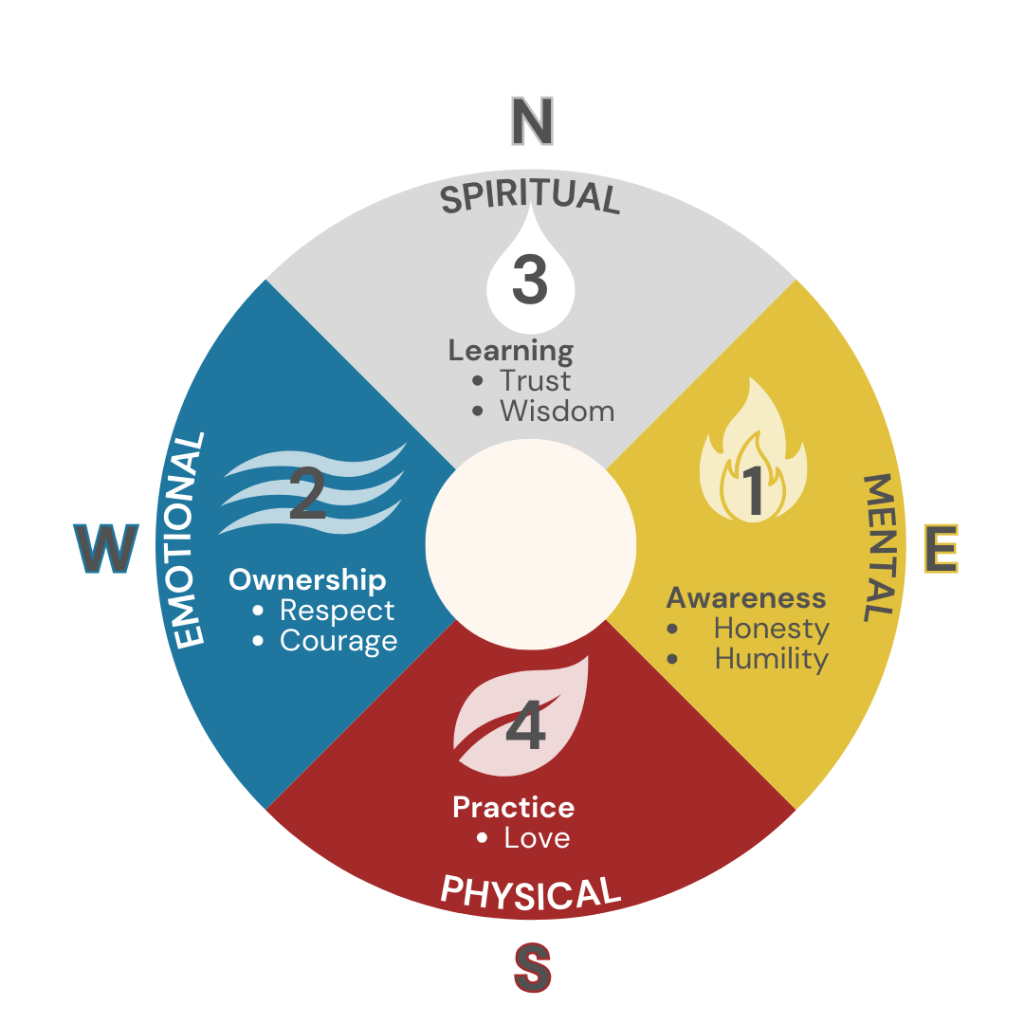
Spiritual/Learning
Focus: Trust • Wisdom
Deepening connection to self, culture, and spiritual practices
Physical/Practice
Focus: Love
Applying learned skills and self-care practices in daily life
Treatment Philosophy
Based on therapeutic research for residential care, the Aboriginal Healing Foundation found that clients in treatment responded well to a healing model combining both cultural and clinical services for Aboriginal people. NWTC's healing model focuses on four phases known as STAGES (Spiritual Transformation towards an Awareness and Guidance of Emotional Self) which integrates the 7 Traditional Values (Humility, Honesty, Kindness, Caring, Respect, Sharing and Courage).
In addition to traditional Indigenous healing and treatment approaches, NWTC integrates other evidence-based approaches through a focus on trauma-informed care.
How the STAGES Work
These four stages are useful in learning about oneself, others and clients' environment. The STAGES are interchangeable and continuous, allowing clients to apply them to all areas of their life after treatment. For example, clients continue to go through these STAGES each time they learn new things about themselves or master a new concept.
This model continues to increase self-awareness that is life-long. In treatment, once a client enters these STAGES, the process becomes easier and quicker with each cycle.
Timeline & Progress
The STAGES of treatment can be completed in four to six months if clients are receptive, motivated and open to change. Clients are able to reflect on their own progress or treatment duration when using these STAGES. The continuous nature of this model means clients can revisit and deepen their understanding throughout their healing journey.
Integration with Grief & Loss
Stages of Grief and Loss are intertwined with the STAGES of Treatment because it allows the client to learn how to grieve and heal from any type of loss and work towards having hope. Loss can include breakdown in family, sexual abuse, death, and other traumatic experiences. This integration ensures holistic healing that addresses both the trauma and the path forward.